
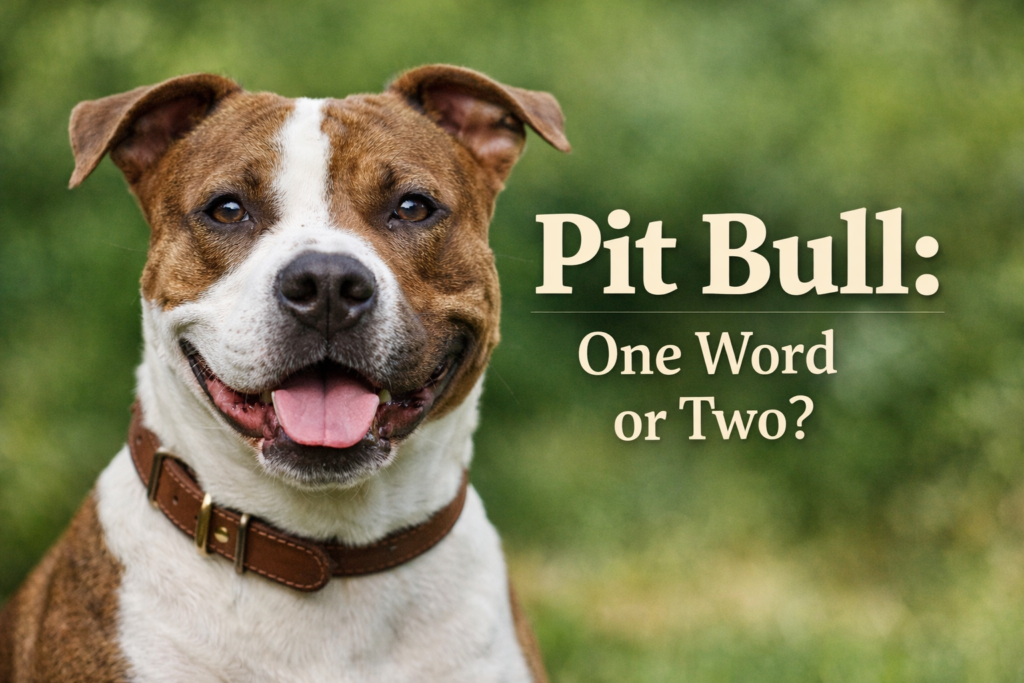
Why the way we use language really matters in today’s society has become more important than ever. Many words take on meanings beyond their original intent, and as a result, people often repeat terms without questioning accuracy. The term “pit bull” is a perfect example. Although it may seem simple at first, confusion around its usage continues to shape public perception.
More importantly, this discussion goes beyond grammar. Instead, it touches on history, accuracy, and responsible communication. Therefore, understanding the correct usage of the term “pit bull” helps reduce misinformation and encourages more thoughtful conversations.
The Power of Language in Modern Culture
Language evolves constantly. Over time, words gain new meanings or lose their original intent. Because of this, misunderstandings happen frequently. In many cases, people repeat phrases without questioning their accuracy.
Consequently, certain words carry emotional weight far beyond their dictionary definitions. “Pit bull” is one such example. Although it refers to a type of dog, it often triggers strong reactions. For this reason, clarity matters.
What Does the Term “Pit Bull” Actually Mean?
In formal writing, “pit bull” appears as two separate words. However, many people casually write “pitbull” as one word. Because of this, inconsistency has become widespread.
Generally speaking, the term most commonly refers to the American Pit Bull Terrier (APBT). That said, different organizations define the term differently. As a result, no single, universal definition exists.
In practice, people often use “pit bull” to describe dogs with shared physical traits, including:
-
Muscular builds
-
Short coats
-
Broad heads
-
Strong jaws
Because these traits appear in many breeds, misidentification occurs frequently. Therefore, appearance alone does not determine breed.
Why “Pit Bull” Is Grammatically Two Words
From a grammatical standpoint, “pit bull” consists of two words. Originally, the term combined “pit,” referencing historical fighting pits, and “bull,” referencing bull-baiting practices. Together, the words described a specific working dog.
Over time, informal usage blurred this structure. As a result, many people now write “pitbull” as one word. Nevertheless, formal grammar rules still support the two-word version.
For clarity and accuracy, writers should use “pit bull” in professional and educational contexts.
How History Shaped the Term “Pit Bull”
To understand the language, history matters. Originally, breeders developed pit bulls for strength, endurance, and determination. At that time, people used them in labor-intensive and sporting roles.
However, society changed. Eventually, dog fighting became illegal and widely condemned. Meanwhile, pit bulls transitioned into family pets and working companions.
Today, many pit bulls serve as:
-
Therapy dogs
-
Service animals
-
Emotional support companions
-
Search-and-rescue dogs
Despite this shift, the language surrounding them did not evolve as quickly.
Why the Term “Pit Bull” Became a Catch-All Label
Historically, “pit bull” referred to a specific breed. Over time, people began using it to describe several similar-looking dogs. As a result, the term expanded beyond its original meaning.
Currently, people often apply the label “pit bull” to dogs that are not American Pit Bull Terriers at all. Because of this, the term now functions more like a category than a breed name.
Consequently, precision suffers, and misunderstandings increase.
Common Myths Created by Language Confusion
Language misuse often fuels myths. For example, many people believe:
-
All pit bulls belong to one breed
-
Head shape predicts aggression
-
The word “pit bull” defines behavior
In reality, none of these claims reflect scientific evidence. Instead, behavior depends on environment, training, genetics, and socialization.
Therefore, inaccurate language leads to unfair assumptions.
How Word Choice Influences Public Perception
Words influence how people think. Because of this, repeated misuse reinforces fear and stigma. Unfortunately, headlines and casual conversations often oversimplify complex issues.
When people use vague or incorrect terms, they unintentionally promote stereotypes. As a result, responsible owners and well-behaved dogs face unnecessary scrutiny.
By contrast, accurate language encourages informed discussion.
Why Accuracy Matters in Everyday Conversations
Choosing the correct wording may seem minor. However, small changes create meaningful impact. When people speak accurately, they promote understanding rather than fear.
Additionally, proper terminology helps:
-
Educate the public
-
Reduce breed-based stigma
-
Encourage responsible ownership
-
Support animal welfare efforts
Even simple corrections can shift conversations in a positive direction.
The Difference Between Informal and Formal Usage
Language often changes in casual settings. For example, social media encourages shortened words and informal spelling. As a result, “pitbull” appears frequently online.
However, formal writing still values accuracy. Therefore, articles, reports, and educational materials should use “pit bull” as two words.
Maintaining this distinction improves clarity and credibility.
Why This Topic Still Matters Today
Although the discussion may seem grammatical, it reflects broader issues. Specifically, it highlights how language shapes attitudes toward animals.
By understanding the history and correct usage of “pit bull,” readers gain insight into how misconceptions spread. More importantly, they learn how to challenge them.
Frequently Asked Questions About “Pit Bull” One Word or Two
❓ Is “pit bull” one word or two words?
The correct form is two words: “pit bull.” Grammatically and historically, the term combines two separate words. Although many people write “pitbull” informally, formal writing standards still recognize “pit bull” as the correct usage.
❓ Why do people write pit bull as one word?
People often write “pitbull” as one word due to casual usage, social media trends, and repetition. Over time, informal spelling became common. However, this does not make it grammatically correct in professional or educational contexts.
❓ Does writing pit bull as one word change its meaning?
No, the meaning usually stays the same. However, writing “pit bull” as one word can create confusion and reduce clarity. For this reason, using two words helps maintain accuracy and consistency.
❓ What does the term pit bull actually refer to?
The term “pit bull” commonly refers to the American Pit Bull Terrier, but people also use it as a general label for similar-looking dogs. Because of this, the term often lacks precision and leads to misidentification.
❓ Is pit bull a specific breed or a general category?
Originally, “pit bull” referred to a specific breed. Over time, people began using it as a category for several breeds with similar traits. As a result, the term now functions as both a breed name and a general descriptor, depending on context.
❓ Why does correct pit bull terminology matter?
Correct terminology matters because language shapes perception. When people use accurate wording, they reduce misunderstandings and stereotypes. Additionally, clear language supports responsible ownership and informed discussions.
❓ Should I use “pit bull” or “pitbull” in articles and blogs?
You should use “pit bull” as two words in articles, blogs, and professional writing. This choice aligns with grammatical standards and improves clarity for readers.
❓ Does incorrect spelling contribute to pit bull stereotypes?
Indirectly, yes. Inaccurate language often oversimplifies complex topics. Consequently, misuse of the term “pit bull” can reinforce misunderstandings about breeds and behavior.
❓ Can language really affect how people view pit bulls?
Yes, language plays a powerful role. When words are used carefully, they promote understanding. On the other hand, vague or incorrect terms can fuel fear and misinformation.
❓ What is the best way to describe pit bulls accurately?
The best approach is to use precise terms, identify specific breeds when possible, and avoid generalizations. By doing so, discussions become more factual and respectful.
Conclusion: Pit Bull One Word or Two and Why Accuracy Counts
The question Really Matters of whether “pit bull” is one word or two may seem small. However, it carries deeper meaning. Writing “pit bull” as two words reflects grammatical accuracy, historical context, and responsible communication.
More importantly, understanding the term helps reduce misinformation. Pit bulls represent more than labels or stereotypes. When raised responsibly, they demonstrate loyalty, intelligence, and resilience.
Ultimately, words matter. By choosing them carefully, we contribute to understanding instead of fear.